
How to Check Criminal History in St. Francis County
Start by deciding which fact needs proof. The St. Francis County inmate roster is the direct source for current local custody and recent booking details. Search ARCourts is better for a filed criminal case. The Circuit Clerk supplies official circuit records, and Arkansas Criminal History provides a paid state name check.
Use the full legal name and correct date of birth when the system requests it. Check spelling variants, but do not assume a similar name is the same person. A booking number identifies a jail event; a case number identifies a court matter. Keep those numbers separate.
- Search the sheriff roster for a current or recently released booking.
- Search ARCourts by the participant's name and review the filing court.
- Compare charges, dates, and identifiers across the results.
- Ask the Circuit Clerk or District Court for the official case record.
- Use ARCH or the authorized state channel when a statewide result is needed.
Four St. Francis Record Systems
No one screen contains a full St. Francis County criminal record. A law-enforcement report describes the incident. The jail roster reflects booking and custody. A district or circuit court file tracks prosecution and disposition. Arkansas State Police and the Arkansas Crime Information Center compile eligible statewide criminal-history information after agencies and courts report it.
| Source | Best use | Key limit |
|---|---|---|
| Sheriff roster | Booking, charge, bond, custody | Not a final court outcome |
| Search ARCourts | Filed Arkansas court cases | Printout is not certified |
| ARCH | Eligible statewide history | Name-based and limited in scope |
| VINE | Custody and event notices | Notification service, not a case file |
Record flow: Arresting agency › St. Francis County booking › District or Circuit Court › Arkansas Crime Information Center.
Official Arkansas Background Checks
Arkansas Criminal History, or ARCH, is the public name-search channel. It costs $24 per selected search result, accepts debit or credit cards, and is online only. The search requires a legal name and correct birth date. Its result can report Arkansas felony and misdemeanor convictions, open Arkansas felony arrests less than three years old, and sex-offender registration status. Juvenile files, sealed convictions, federal records, and other states are outside its output.
The separate Arkansas Online Criminal Background Check System serves checks authorized by law or supported by signed consent. An account is needed for online use. The Arkansas State Police overview lists $22 for an online check, while an ASP-122 mail request is $25 by check or money order. Local public fingerprint service was not verified, so confirm capture instructions with the agency that requires fingerprints.
| Check | Channel | Published fee |
|---|---|---|
| Open criminal history | ARCH online | $24 |
| Authorized or consent check | ASP online system | $22 |
| ASP-122 request | $25 |
Read ARCH Results Carefully
The official ARCH landing page explains its result choices and the information needed to search.
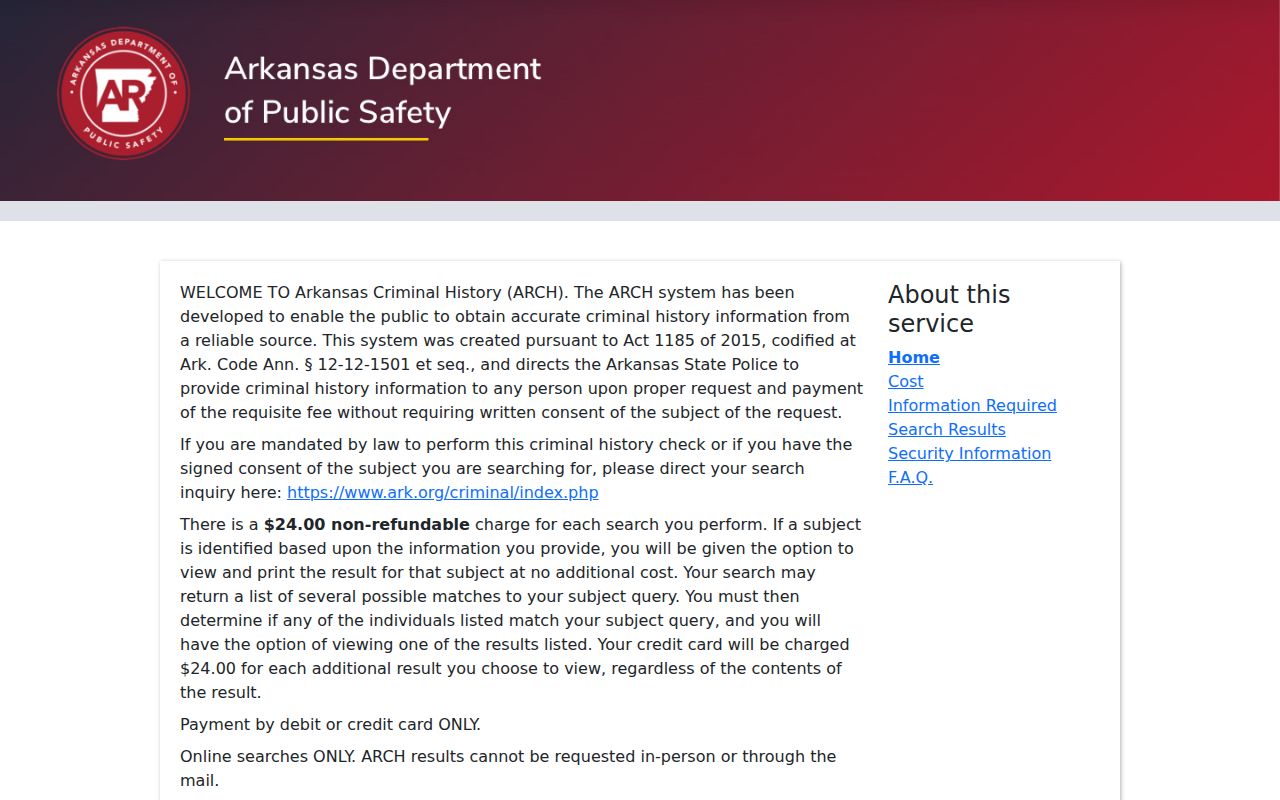
The screen reinforces a central limit: a name match is not fingerprint verification. ARCH may return identified with history, identified without history, or no subject identified. A returned name alone does not prove identity.
The authorized Arkansas background-check system uses a different account-based route for mandated or consent checks.
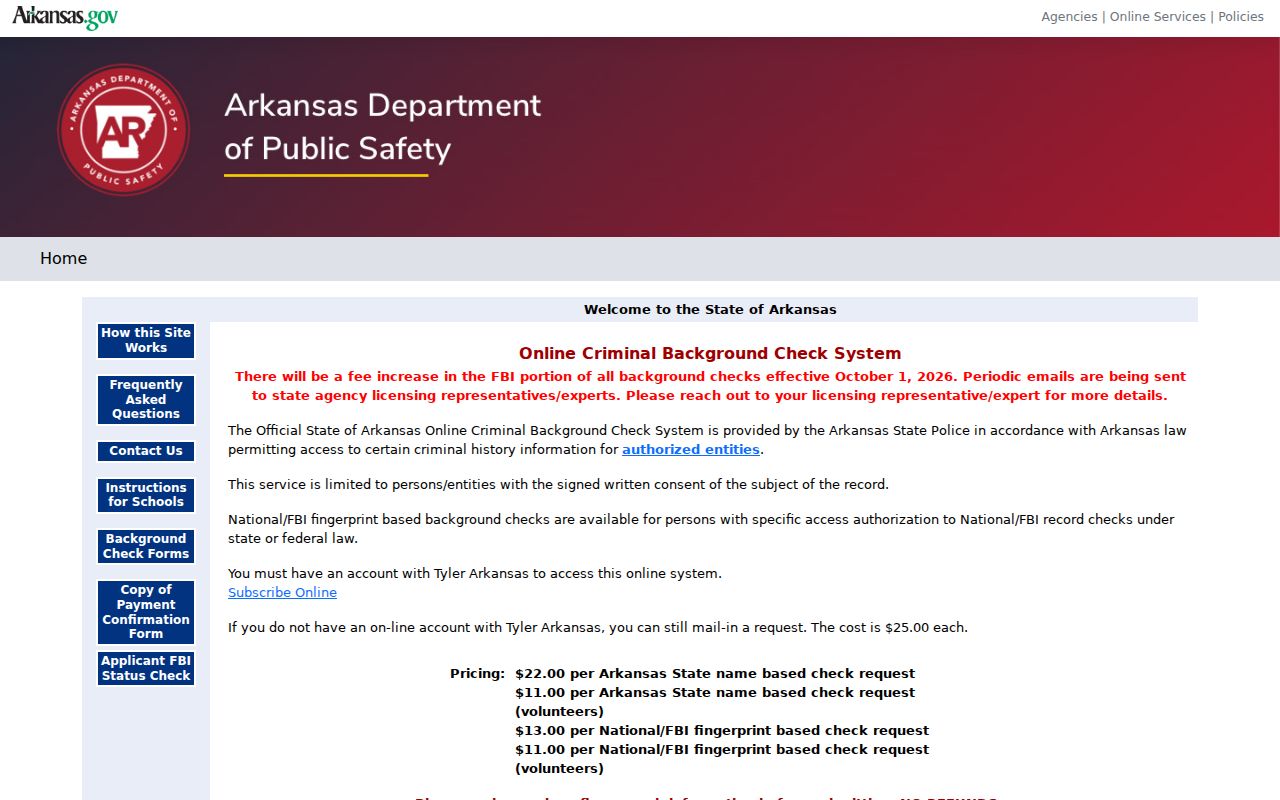
Choosing the right channel prevents a public personal inquiry from being mistaken for a regulated fingerprint or consent-based check.
Types of Criminal Records
St. Francis County agencies create different records at different points. An arresting officer may create an incident report. The detention center creates a booking entry. Prosecutors and courts create charging papers, dockets, orders, and dispositions. State systems then collect only the data their laws and reporting rules allow.
- Arrest and booking records: jail intake data, charges at booking, bond, and custody status.
- Criminal court files: case number, parties, events, documents, rulings, and disposition.
- Repository history: eligible Arkansas conviction and open-felony-arrest data.
- Warrant material: court-issued process tracked by courts and law enforcement.
- Supervision and registry records: probation, parole, custody notices, and public sex-offender data.
St. Francis Sheriff Roster
The sheriff's public site puts the inmate roster, most-wanted list, press releases, alerts, tips, and app links near the front. The official sheriff home page shows those entry points.
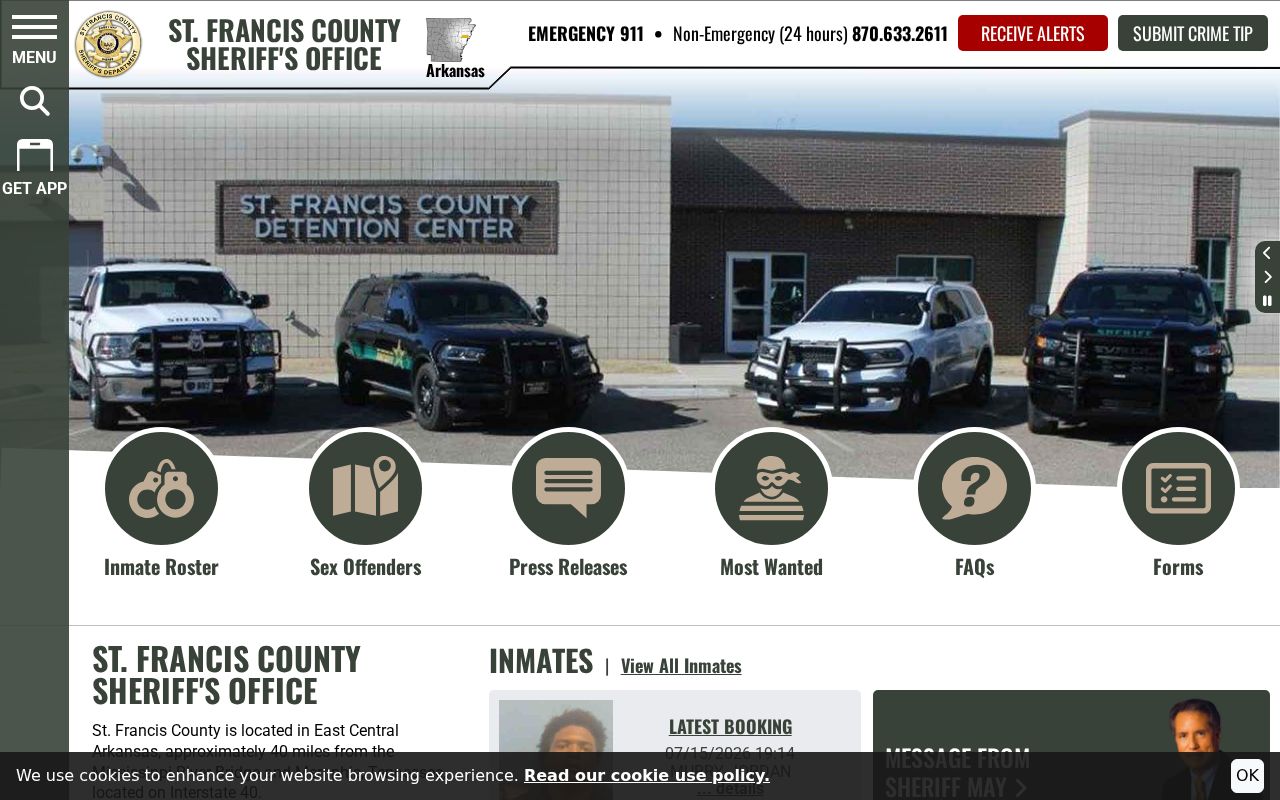
Use the roster for current inmates and its released option for recent release information. It displays name, photo, booking number, age, booking date, charges, bond, and a profile link. Those charges reflect the booking stage and may differ from the prosecutor's later filing.
The office reports a 110-person jail capacity and handles both male and female holds. A changing roster count should never be presented as a fixed statistic. For an outcome, carry the name and booking facts into Search ARCourts or call the proper clerk.
What a St. Francis County Criminal Record Shows
The contents depend on the source. A roster record is strong on custody facts but weak on final disposition. A case file can show pleadings and court action, but an online public view may omit protected data. ARCH is a repository summary, not a copy of either source file.
| Name & identifiers | Legal name, participant details, and system-specific numbers. |
|---|---|
| Booking data | Booking number, date, photo, listed charges, bond, and custody status. |
| Case data | Case number, court, parties, events, status, and available documents. |
| Disposition | Dismissal, plea, acquittal, conviction, or other recorded outcome. |
| Sentence | Custody term, probation, fine, costs, or restitution when public. |
| Supervision | Community-correction office or custody notification status. |
- Booking
- The jail intake record made after an arrest.
- Charge
- An alleged offense, not proof of guilt.
- Disposition
- The current or final outcome recorded by the court.
- Bond
- Money or conditions used to secure release.
Search St. Francis Court Cases
The Search ARCourts interface accepts participant names and organization or case-description terms.
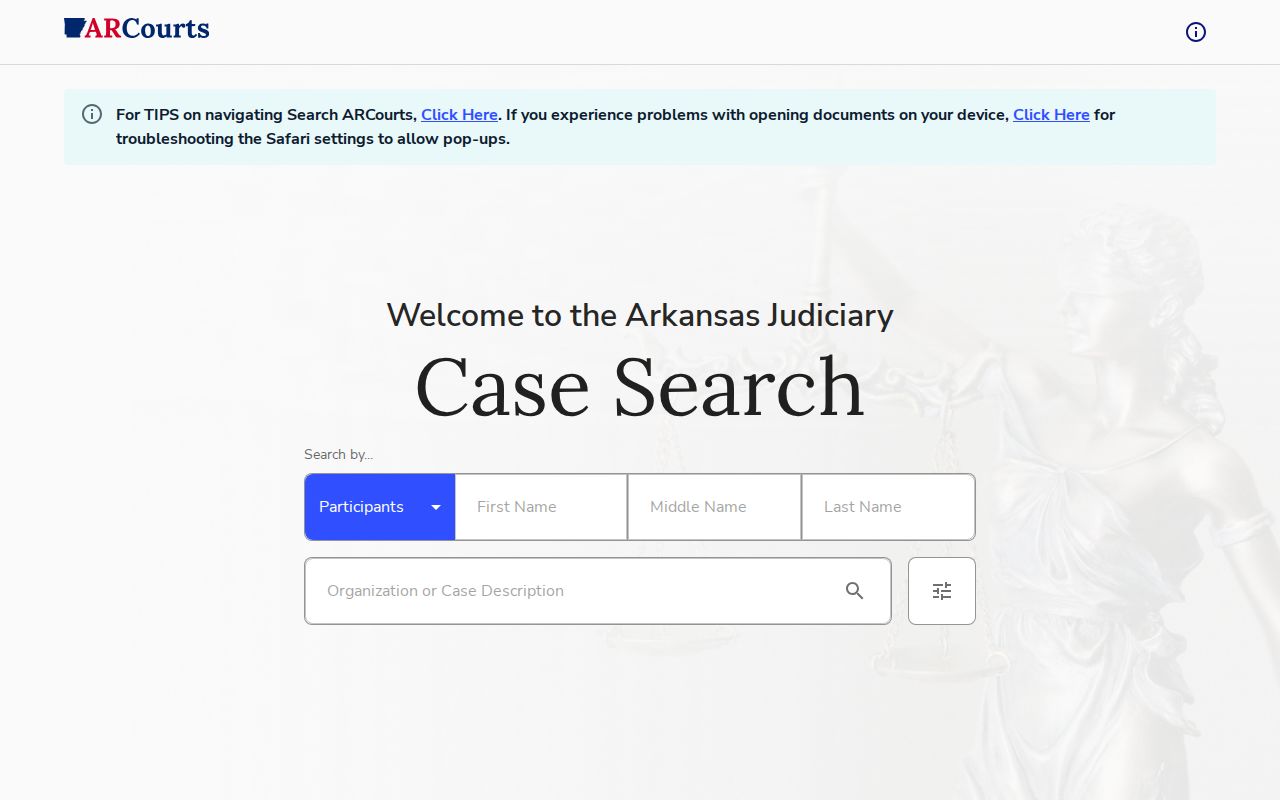
Results may identify the case number, court, parties, events, documents, and status. The public print warning says the output is not an official court record. Contact the filing court for an official or certified copy. Older files or protected documents may require a counter request even when the case index is visible.
Circuit criminal files are held by the Circuit Clerk at 313 South Izard, Suite 8, Forrest City. District Court at 615 East Cross handles district matters, citations, plea and arraignment, and trials. Trials are scheduled Monday and Wednesday afternoons, while plea and arraignment sessions are set for Friday mornings. The published small-town schedule places Madison, Palestine, and Wheatley matters on one Tuesday each month. The two courts are separate even though their public records may both appear in the statewide search.
A recent booking may not have a case number yet. Filing occurs after the arrest stage, and the charge chosen by a prosecutor may not match the wording on the jail roster. Search again after filing, or call the clerk with the name and approximate event date. Once a case is found, verify each charge's disposition rather than treating the overall case status as the outcome of every count.
Public Access Laws
The Arkansas Freedom of Information Act generally opens public records to Arkansas citizens during regular business hours, subject to exemptions. Court records also follow Arkansas Supreme Court Administrative Order No. 19. Active investigations, juvenile material, sealed records, protected victim data, and confidential identifiers may be withheld or redacted.
Key Statutes:
Ark. Code § 25-19-105 sets the general public-record access rule and exemptions.
Ark. Code § 12-12-1506 permits dissemination of qualifying conviction and felony-arrest information.
Ark. Code § 12-12-1503 excludes sealed records from conviction information.
Ark. Code § 16-90-1401 names the Comprehensive Criminal Record Sealing Act.
County Jail or State Prison
Local jail custody and state prison custody are not the same search. The sheriff roster covers people booked into St. Francis County custody. The Arkansas Department of Corrections Inmate Search covers the state correctional system.
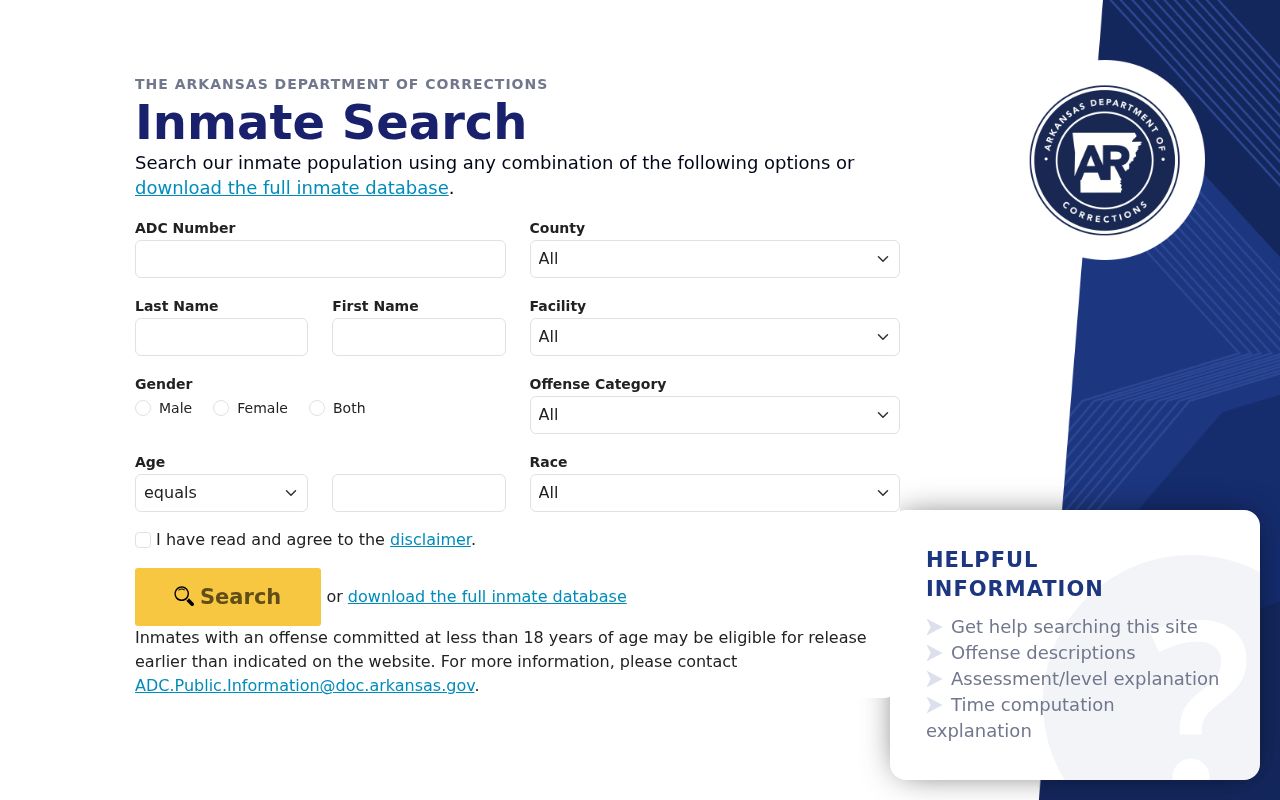
The state locator provides ADC number, county, name, and facility filters. It should be checked after a sentence or transfer, not used to rule out a recent county booking. Arkansas VINE can add custody, court-event, and supervision notifications, but its alerts do not replace either official record.
VINE receives county jail updates about every 15 minutes, Arkansas Department of Corrections updates hourly, and court or supervision information once per day. Those intervals explain why an alert can trail a live change. VINE may show the supervision type, office name, and supervision case status. For the underlying reason for custody, return to the sheriff or court record.
Probation and parole are also distinct. Arkansas runs community supervision through the Division of Community Correction, with a Forrest City office serving the county. The Arkansas Parole Board makes release decisions, while community correction supervises parole, probation, and post-release cases. A supervision notice does not by itself supply the sentence order or full case history.
Sealed, Expunged & Restricted
Arkansas calls the main remedy record sealing, though older material may use expungement. Eligible St. Francis County matters must be filed in the court that handled the case. After a judge approves and the clerk files an order, the clerk forwards it to ACIC. ACIC states that Arkansas law allows it 30 days from receipt to complete the update.
Juvenile files, sealed convictions, active investigation material, confidential court data, and sensitive victim or minor information are not ordinary public output. ARCH excludes sealed convictions and juvenile records. Because no local filing-fee schedule or county packet was verified, ask the proper clerk about current costs and forms.
Begin with the exact case number and disposition. Determine whether District Court or Circuit Court entered the final order, because the petition returns to that court. The clerk may provide forms and filing facts but cannot give legal advice. The St. Francis Circuit Clerk points residents toward Legal Aid of Arkansas for legal help. After sealing, verify the update with the court and the state source instead of assuming every public system changed at the same time.
St. Francis Record Offices
Forrest City is the county records hub. The Association of Arkansas Counties profile confirms the courthouse and elected-office contacts.

The main offices sit near the Izard Street courthouse and East Cross District Court. Call before visiting when a fee or service is not published.
Circuit Clerk
313 South Izard, Suite 8
Forrest City, AR 72335
870-261-1715
Monday-Friday, 8:00 a.m.-4:30 p.m.
District Court
615 East Cross
Forrest City, AR 72335
870-261-1410
Sheriff's Office
313 South Izard, Room 10
Forrest City, AR 72336
870-261-1795
Monday-Friday, 8:00 a.m.-4:30 p.m.
Forrest City Records Hub
St. Francis County had 23,090 residents in the 2020 Census. The Census QuickFacts interface provides the official county context.
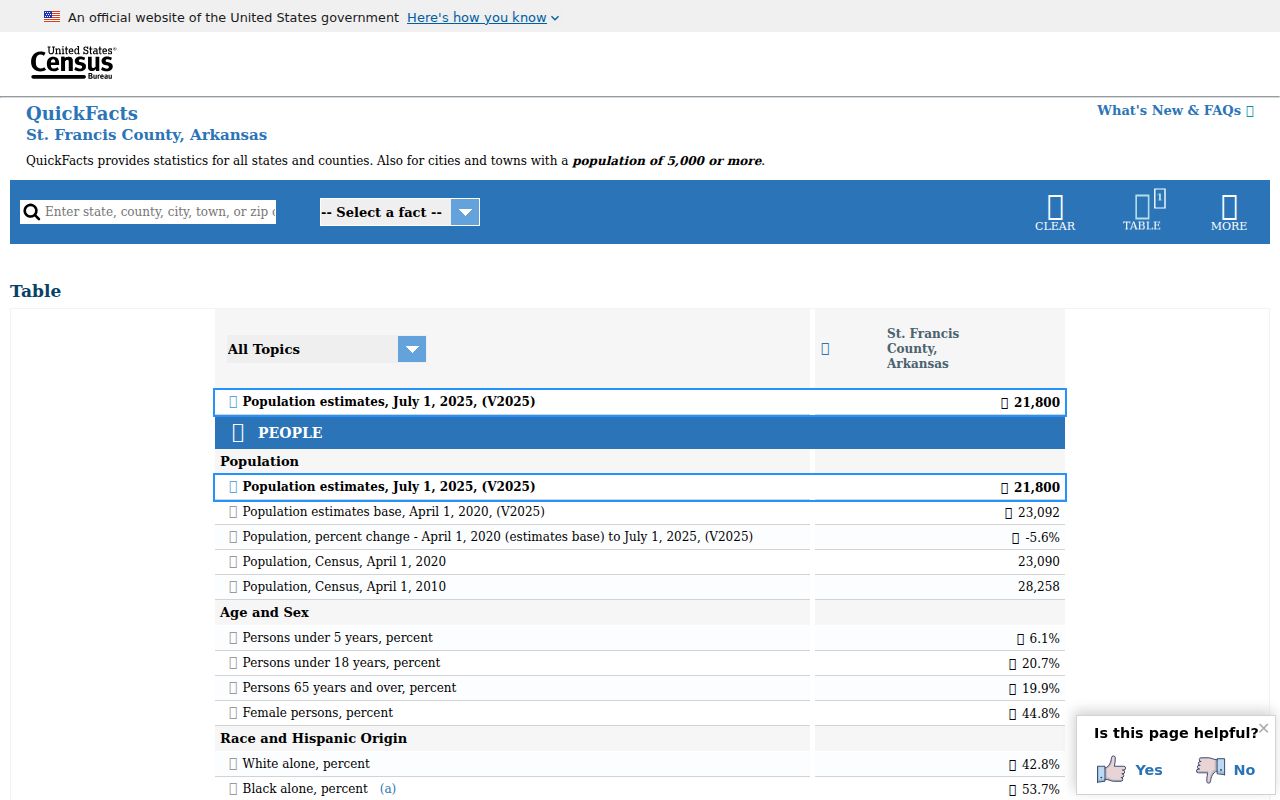
Forrest City contains the courthouse, sheriff and jail functions, District Court, city police, and community-correction office. Residents of smaller towns often return to these county offices for formal custody or court records even when a local officer began the case.
There is no verified countywide police-report portal. An incident report stays with the agency that created it, such as the sheriff, Forrest City Police Department, Madison Police Department, or Arkansas State Police. Ask that agency for its current request method and copy fee. The sheriff has a web contact form, but it warns that messages are not watched around the clock. Urgent needs belong on the published phone channel.
The sheriff's most-wanted page is also not a complete active-warrant index. It highlights selected people and separates current from arrested entries. A person missing from that page may still have court process. For warrant status, contact the court or law-enforcement office that would hold the warrant, and avoid appearing in person without legal advice when personal arrest risk is a concern.
Criminal Records by City in St. Francis County
City-level access differs sharply. Forrest City publishes police and District Court contacts. Hughes relies on county and state routes because no separate official records portal was located. Madison has a local police link and a monthly small-town district schedule, but no standalone court portal was verified.
Forrest City Criminal History
Population estimate 12,340. Police, court, and county offices are based here.
Hughes Criminal History
Population estimate 977. County channels are the practical official route.
Madison Criminal History
Population estimate 717. District matters follow the published small-town schedule.